Here’s a question that should bother you: What if AI isn’t making work easier, but fundamentally changing what kind of work you’re being asked to do - and you’re completely unprepared for it?
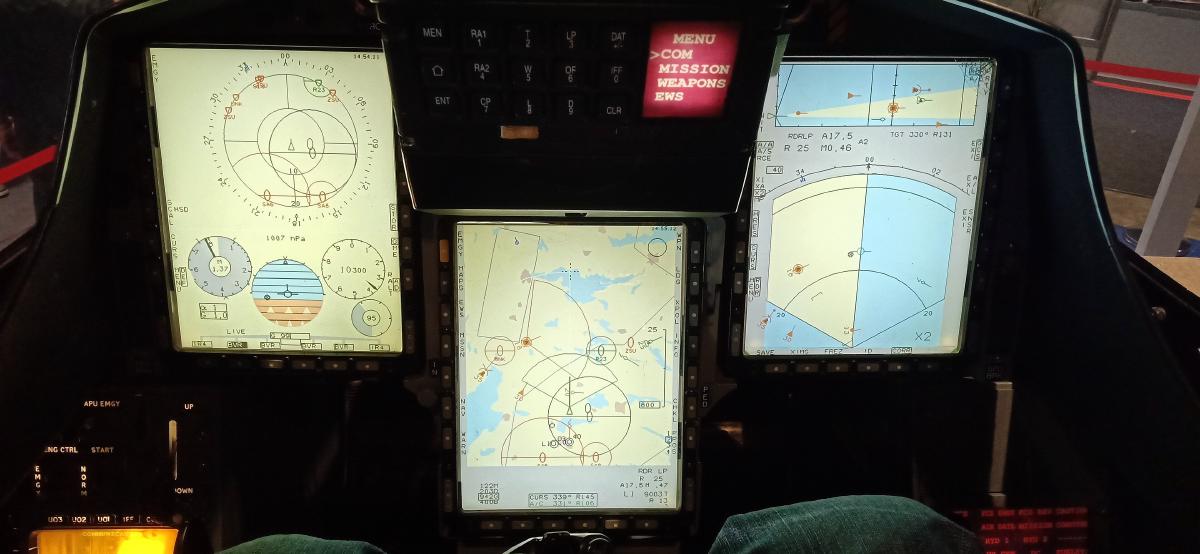
The US Air Force has a test for aspiring fighter pilots. Among the battery of assessments is something called the Multi-Tasking Test[1]. Candidates must simultaneously add three-digit numbers, monitor a fuel gauge, respond to their call sign being announced, and memorize letter sequences. They do this while other tests measure their ability to track moving targets with a joystick and rudder pedals.
The fascinating part? Research shows that performance on these individual tasks doesn’t predict success. What matters is how well candidates perform when all tasks run concurrently[2]. The Air Force isn’t testing whether you can do four things - they’re testing how gracefully you can rapidly switch between them without falling apart.
Now here’s the uncomfortable truth: AI tools are demanding precisely this skill from every knowledge worker. Except unlike fighter pilots, we’re neither selected for it nor trained in it.
The Research That Should Alarm You #
A new study from Berkeley researchers Aruna Ranganathan and Xingqi Maggie Ye tracked 200 employees at a U.S. tech company for eight months as they adopted AI tools. The results published in Harvard Business Review directly contradict the productivity paradise we’ve been promised[3].
Workers didn’t work less. They worked differently - and exhaustingly so. They juggled “several active threads at once: manually writing code while AI generated an alternative version, running multiple agents in parallel, or reviving long-deferred tasks because AI could ‘handle them’ in the background.”
The pattern created what the researchers called “continual switching of attention, frequent checking of AI outputs, and a growing number of open tasks.” Sound familiar? It should. It’s exactly the cognitive load that fighter pilot selection is designed to identify who can handle.
The cruel twist: these workers experienced “cognitive fatigue, burnout, and weakened decision-making” - but managers saw rising output and simply assigned more work. The efficiency gains were immediately consumed by escalating expectations.
The Pattern Is Older Than You Think #
This isn’t new. We’ve seen this movie before, and the ending never changes.
In 1865, economist William Stanley Jevons observed something counterintuitive about steam engines in British factories. As engines became more efficient and coal became cheaper, coal consumption tripled by 1900[4]. More efficient engines didn’t reduce coal use - they enabled more factories, which consumed more coal. The efficiency improvement was instantly converted into increased demand.
The same pattern repeated with the telegraph in the 1860s. The promise was faster communication for better-informed decisions. What actually happened was the elimination of the “cooling off” period that slow communication had provided. Diplomats lost autonomy. Political leaders faced new time pressures. As the U.S. State Department history notes: “The acceleration of international disputes posed challenges to foreign ministries, which frequently used delay as a tool in resolving international crises."[5]
Then came the typewriter in the 1870s. Handwriting topped out at 30 words per minute. Stenographers hit 130. Typewriters eventually reached 150+[6]. The result? An explosion in correspondence volume. Business expanded. Filing systems were overwhelmed. What was gained in speed was immediately consumed by expectations.
In every case, the technology delivered exactly what it promised: dramatic improvements in capability. And in every case, that capability was weaponized into increased workload rather than reduced effort.
What Your Brain Actually Does When You “Multitask” #
Here’s where it gets uncomfortable. Earl Miller, a neuroscientist at MIT who studies the prefrontal cortex, is blunt about multitasking: “The brain is not designed for multitasking. When people think they’re multitasking, they’re actually just task-switching very rapidly. And every time they do, there’s a cognitive cost."[7]
The research is unambiguous. Only 2.5% of people can effectively multitask - the so-called “supertaskers”[8]. For the remaining 97.5% of us, attempting to multitask creates what researchers call “switch costs.”
The American Psychological Association found these switching costs reduce productivity by up to 40%[9]. Not because you’re incompetent, but because your prefrontal cortex - the part responsible for executive functions - must deactivate one neural network and activate another. Each switch creates micro-delays. Studies from UC Irvine show it takes an average of 23 minutes to fully recover from an interruption[10].
Your brain isn’t parallel processing. It’s frantically toggling between tasks while pretending everything’s fine. The illusion works just well enough that you don’t realize how much cognitive capacity you’re burning through until you hit the wall.
Stanford’s Clifford Nass studied chronic multitaskers and found they performed worse on nearly every cognitive measure: “People who multitask all the time can’t filter out irrelevancy. They can’t manage a working memory. They’re chronically distracted."[11]
Read that Berkeley study again with this context. AI tools forced workers into a pattern that neuroscience tells us is cognitively expensive and that only 2.5% of the population can sustain effectively. The tools created the exact conditions that fighter pilot selection is designed to test for.
The Irony Should Be Obvious #
Fighter pilots are in that elite 2.5%. They’re selected specifically because they can task-switch more effectively than average. Even then, they undergo extensive training. They practice in simulators. They build muscle memory. They learn when to switch and when to hold focus.
Knowledge workers with AI? No selection. No training. Just a ChatGPT subscription and the expectation that you’ll figure it out.
The Berkeley researchers observed workers feeling like they had a “‘partner’ that could help them move through their workload” - the exact psychological mechanism that kept them in the exhaustion trap. The AI created momentum without reducing the actual cognitive cost of the work.
This is where the comparison to historical automation becomes especially sharp. The telegraph and typewriter created new categories of work - filing systems, correspondence management, diplomatic protocols. AI is creating new categories too: output verification, prompt refinement, tool orchestration, hallucination detection.
These aren’t automatable tasks. They require judgment, domain expertise, and sustained attention. They’re the “hidden supervisory labor” the HBR article identified - work that organizations benefit from but rarely acknowledge or measure.
What Actually Needs to Happen #
The Berkeley researchers call for organizations to develop an “AI practice” - structured approaches to how AI is used, with clear limits and expectations. That’s necessary but insufficient.
The deeper issue is that we’re applying 19th-century management thinking to 21st-century cognitive demands. Every previous wave of automation followed the same pattern: efficiency improvements became workload increases because managers saw faster completion and simply assigned more tasks. The Jevons Paradox isn’t a physics problem - it’s a management failure.
Organizations need to recognize that AI isn’t just another productivity tool. It’s a cognitive load multiplier. Using it effectively requires:
Selection honesty: Acknowledge that not everyone can sustain high task-switching workloads. The Air Force knows this. Your organization should too.
Training investment: You can’t hand someone a flight simulator and expect them to fly a jet. You can’t hand someone Claude or ChatGPT and expect optimal performance without guidance.
Measurement changes: Output volume is a terrible metric when cognitive sustainability matters. Track error rates. Track correction time. Track decision quality over time.
Expectation discipline: This is the hard one. Managers must resist the temptation to immediately consume efficiency gains with increased assignments. The historical pattern only breaks when organizations consciously choose to break it.
The alternative is what we’re seeing now: a workforce pushed into cognitive patterns they’re neither selected nor trained for, experiencing burnout while managers wonder why turnover is spiking.
The Question You Should Be Asking #
AI tools will continue improving. They’ll get faster, more capable, more integrated. The Jevons Paradox suggests this will only intensify the problem unless we consciously intervene.
So here’s the question: Are you building systems that amplify human capability, or are you building systems that extract maximum throughput regardless of cognitive cost?
Because right now, we’re asking everyone to be fighter pilots without the selection, training, or support systems that make fighter pilots successful. We’re repeating every mistake from the telegraph and typewriter era, just faster and with more computing power.
The pattern is clear. The neuroscience is unambiguous. The history is instructive.
What remains to be seen is whether we’ll learn from any of it before the cognitive exhaustion becomes unsustainable.
I’m not particularly optimistic. But I hope to be proven wrong.
References #
[1]: Air Force Personnel Center. “Pilot Candidate Selection Method (PCSM).” Test of Basic Aviation Skills. https://access.afpc.af.mil/pcsmdmz/index.html
[2]: Carretta, T. R., King, R. E., & Retzlaff, P. D. (2023). “Multitasking as a predictor of simulated unmanned aircraft mission performance: Incremental validity beyond cognitive ability.” PMC. https://pmc.ncbi.nlm.nih.gov/articles/PMC10013425/
[3]: Ranganathan, A., & Ye, X. M. (2026). “AI Doesn’t Reduce Work—It Intensifies It.” Harvard Business Review, February 9, 2026. https://hbr.org/2026/02/ai-doesnt-reduce-work-it-intensifies-it
[4]: Jevons, W. S. (1865). The Coal Question: An Inquiry Concerning the Progress of the Nation, and the Probable Exhaustion of Our Coal-Mines. As cited in: “What is Jevons Paradox? And why it may — or may not — predict AI’s future.” Northeastern University News, February 7, 2025. https://news.northeastern.edu/2025/02/07/jevons-paradox-ai-future/
[5]: Office of the Historian, U.S. Department of State. “U.S. Diplomacy and the Telegraph, 1866.” Milestones: 1866-1898. https://history.state.gov/milestones/1866-1898/telegraph
[6]: Europeana. “From quills to typewriters: How the Industrial Revolution changed our writing culture.” https://www.europeana.eu/en/stories/from-quills-to-typewriters-how-the-industrial-revolution-changed-our-writing-culture
[7]: Miller, E. K., as quoted in Kent State Magazine. “Attention, Please.” https://www.kent.edu/magazine/news/attention-please
[8]: Cleveland Clinic Health Essentials. (2021). “Why Multitasking Doesn’t Work.” March 10, 2021. https://health.clevelandclinic.org/science-clear-multitasking-doesnt-work
[9]: American Psychological Association, as cited in: “The Myth of Multitasking: Why It Fails and What to Do Instead.” NFIL, August 28, 2025. https://nfil.net/neurodiversity/the-myth-of-multitasking-why-it-fails-and-what-to-do-instead/
[10]: Mark, G., Gudith, D., & Klocke, U. (2008). “The cost of interrupted work: more speed and stress.” As cited in: “The Myth of Multitasking.” NeuroLeadership Institute, September 18, 2025. https://neuroleadership.com/your-brain-at-work/the-myth-of-multitasking
[11]: Nass, C., as cited in: “Multicosts of Multitasking.” PMC. https://pmc.ncbi.nlm.nih.gov/articles/PMC7075496/