Decision Making

What Happens to the No? The Not-So-Silent Veto

What Happens to the No? The Not-So-Silent Veto

·1722 words·9 mins
Most organizations have a risk acceptance process on paper. What they actually have is hallway conversations and comment threads that vanish when projects close. When something breaks, everyone reconstructs who knew what from memory, under pressure, with lawyers involved. Aviation solved this problem decades ago with the MEL. The framework forces explicit conditions, named owners, and real expiry dates. Security work has similar machinery. We just let it collect dust while risks drift between teams unowned.

Pulling The Lever: The Hand on It Belongs to Someone With a Bonus

Pulling The Lever: The Hand on It Belongs to Someone With a Bonus

·1469 words·7 mins
You did the hard work. Found the buried metric, rebuilt the report, put the lever in the top-left tile. The meeting went beautifully. Everyone nodded. Then nothing changed. Here’s what I keep relearning: a lever is not a mechanism. It’s a person with a calendar, a bonus structure, and reasons to leave things exactly as they are. Most reports die in the gap between who requested them and who has to work differently on Monday.
Finding The Lever: Half Your Dashboard Isn't Connected to Anything

Finding The Lever: Half Your Dashboard Isn't Connected to Anything

·1360 words·7 mins
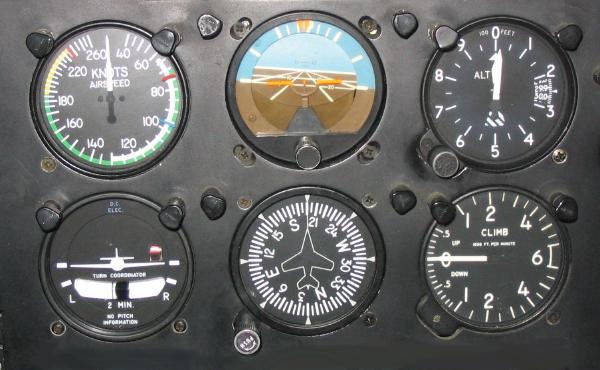
Every student pilot learns this the hard way: staring at the altimeter won’t fix your altitude. It’s a readout, not a control. Your dashboards have the same problem. Most of the metrics sitting at top left are gauges, things people can only watch. The actual levers, the numbers someone could move on Monday morning, are buried three clicks deep rendered in grey font. Three questions tell you which is which. The answer is usually uncomfortable.